

Fascism Misused: How History and Language Are Under Assault
Why Antifa, Ideological Smears, and a Failing Education System Threaten Freedom

This lazy and uneducated application of “fascist” does real damage. It erases history. It trivializes the horrors of the 20th century, when dictatorships razed nations and murdered millions. It poisons our political culture. If every opponent is a fascist, there is no reason to debate, compromise, or even listen. As an miseducated robot, you don’t argue with “fascists”—you silence them.
Frederick R. Smith

Words 1,309 | Read Time 6 min | Enjoy
Forword
The word fascism has its roots deep in ancient Rome. It originates from the Italian word “fascismo,” which in turn traces back to “fascio,” meaning a “bundle” or “sheaf.” In Roman times, the fasces—a bundle of rods bound tightly together, often with an axe at its center—was carried by magistrates as a symbol of authority. The message was simple but powerful: a single rod can be broken easily, but bound together, the sticks are strong. Strength lies in unity, and the bundle represented both authority and collective power.
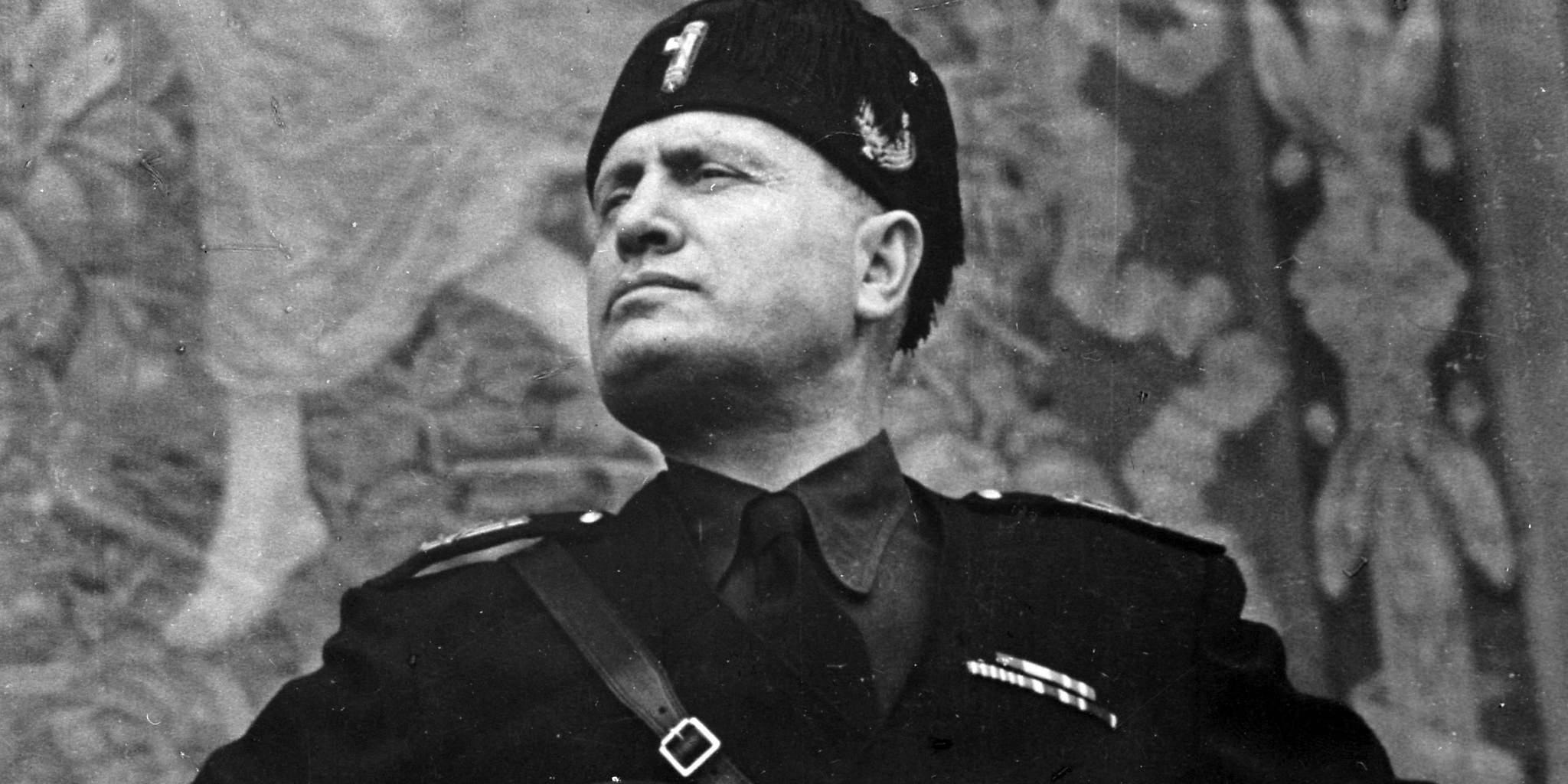
Fast forward to early 20th-century Italy. Small political groups called themselves fasci, emphasizing solidarity and shared purpose. When Benito Amilcare Andrea Mussolini rose to power, he formalized this language, naming his movement the Fasci Italiani di Combattimento—the Italian Combat Leagues. From this, fascismo emerged as the label for the ideology he promoted: a rigidly authoritarian, nationalist system that demanded unity and suppressed dissent.
By the 1920s, the term crossed into English as fascism, carrying with it the same sense of collective force and central control—but now tied unmistakably to Mussolini’s Italy and, later, Hitler’s Germany. The word’s journey—from a simple bundle of sticks to a symbol of totalitarian power—reminds us how language can evolve with history, often carrying both literal and symbolic weight.
Fascism: How the Word Is Abused Today
The term “fascist,” as described above, once carried significant meaning. It referred to Mussolini’s rule of Italy as well as Hitler’s Germany, describing a brutal authoritarian system that suppressed freedom, silenced dissent, and required total loyalty to the state. Today, however, it has been reduced to a political weapon—an easy insult used against anyone who opposes socialism or dares to think independently. The word has been emptied of meaning, reduced to a universal smear: if you disagree, you are a fascist.
The Real History of Fascism
Fascism was born in the rubble of World War I. Mussolini rejected democracy, socialism, and individual liberty. Hitler did the same, adding a racial ideology that fueled genocide. Fascism is not conservatism in a uniform, nor capitalism with military parades—it is dictatorship, one-party rule, propaganda, and the violent suppression of freedom. Millions died under its shadow. It was a system that demanded obedience, crushed opposition, and glorified the state above all else.
Today, public-private partnerships (PPP) are a mild echo of fascism’s core blueprint: the state directing private enterprise to serve its goals. In both cases, the government calls the shots, while businesses profit from aligning with official priorities, subordinating independent market forces to political objectives. Taxpayers shoulder the risk, private companies reap the reward, and the distinction between public good and corporate gain blurs. Unlike Mussolini’s authoritarian model, PPPs operate within “democratic” frameworks; however, they structurally reflect the same marriage of government power and private wealth, where collaboration replaces competition and state objectives dictate the behavior of enterprises.
The Modern Twist: Fascism as a Smear
Fast forward a century, and “fascist” is no longer a precise description of a political system—it is a weapon of convenience. Disagree with socialism? Fascist. Want secure borders? Fascist. Support free markets or personal responsibility? Fascist. This misuse has led to a significant deterioration in political discourse, with genuine debates being replaced by name-calling and moral intimidation. The word has been hollowed out, leaving only the moral intimidation of labeling opponents as evil before they even speak. Debate dies, dialogue evaporates, and intellectual laziness reigns.
Antifa: Proof of the Problem
No group demonstrates this misuse more clearly than the violent terrorist group called Antifa. Claiming to oppose fascism, they have made it their mission to label anyone outside their ideological bubble a “fascist.” Mainstream conservatives, libertarians, or even ordinary citizens are fair game.
But the mislabeling is not harmless. It’s weaponized. Once someone is a “fascist,” the rule of law, civil discourse, and basic decency are suspended. Violence, censorship, and deplatforming—all are justified in the name of fighting fascism. Ironically, in their attempts to stamp out authoritarianism, Antifa often behaves in ways that mirror the very fascists they claim to oppose: street mobs enforcing ideological conformity, silencing dissent, ruling by fear. Under the banner of anti-fascism, they perpetuate authoritarianism itself.
The Danger of Misuse
This lazy and uneducated application of “fascist” does real damage. It erases history. It trivializes the horrors of the 20th century, when dictatorships razed nations and murdered millions. It poisons our political culture. If every opponent is a fascist, there is no reason to debate, compromise, or even listen. As an miseducated robot, you don’t argue with “fascists”—you silence them.
And there’s a cruel irony here: those who scream “fascist” at every turn justify censorship, intimidation, and coercion, all in the name of fighting authoritarianism. They create a false binary: either embrace socialism, or you are branded a fascist. Freedom—encompassing classical liberalism, conservatism, and libertarianism—gets erased in the process.
The Failure of Historical Education
The reckless misuse of the term “fascism” reflects a deeper cultural issue: our failing education system. Too many people today lack a genuine understanding of history. Schools often reduce fascism to mere slogans, leaving students unaware of its true nature, origins, and consequences. A comprehensive historical education that explores the complexities and nuances of historical events can equip citizens with the knowledge and critical thinking skills necessary to prevent the misuse of political labels, such as “fascist.”
When citizens cannot distinguish between Mussolini, Hitler, and Stalin—or between genuine authoritarianism and ordinary political disagreement—the word “fascist” becomes meaningless. Ignorance fuels rhetoric. Without historical literacy, political labels lose their bite and discourse collapses into name-calling. Citizens are left defenseless against the very forms of authoritarian thinking that history should have taught them to recognize and resist.
A Call to Action
We are at a critical juncture. When words are distorted, history is forgotten, and mobs impose ideological conformity, the very essence of democracy is at risk. The misuse of the term ‘fascist’ as a political tool, the decline of historical knowledge, and the rise of authoritarian tactics are creating a toxic environment. In such a climate, freedom is not protected; it is under attack. The implications of this trend for our republic are severe, and we must take action now to change course.
If we genuinely value liberty, we must advocate for precision in language, uphold rigorous education, and demonstrate courage in our discussions. Stop labeling everyone you disagree with as a fascist. Do not justify violence in the name of ideology. Educate yourself about history. Engage in debates over ideas. Peacefully challenge authoritarianism (e.g., socialism and its ugly counterparts) wherever it manifests, whether in the streets, the classroom, or the corridors of power.
Parting Shot
As I write this essay, Trump says he’s designating Antifa as a terrorist organization. The Marxists, progressives, et al, in the media are in full throttle “defend Antifa mode” or “Antifa is a myth mode.” Let’s not forget that many Democrats are pro-criminal.

I warmly encourage you to consider becoming a paid subscriber if you have the means. Tips are appreciated, too. Regardless of your choice, your support is deeply appreciated. From the bottom of my heart, thank you for your invaluable support!
Not to be seen on CNN: The media’s go-to antifa ‘expert’ is a financial backer of antifa
https://www.msn.com/en-us/news/us/the-media-s-go-to-antifa-expert-is-a-financial-backer-of-antifa/ar-AA1N97Om
Wouldn't one consider the CCP as a modern analogue of a fascist society? I tell my students, once the state and industry is one, along with the subjugation of dissent, you have facisim. Pre WW2 Germany, Russia, Spain and Italy had similar systems. As an essay question, I ask my students if our current (US) political and economic system is heading in that direction, tell me why or why not.